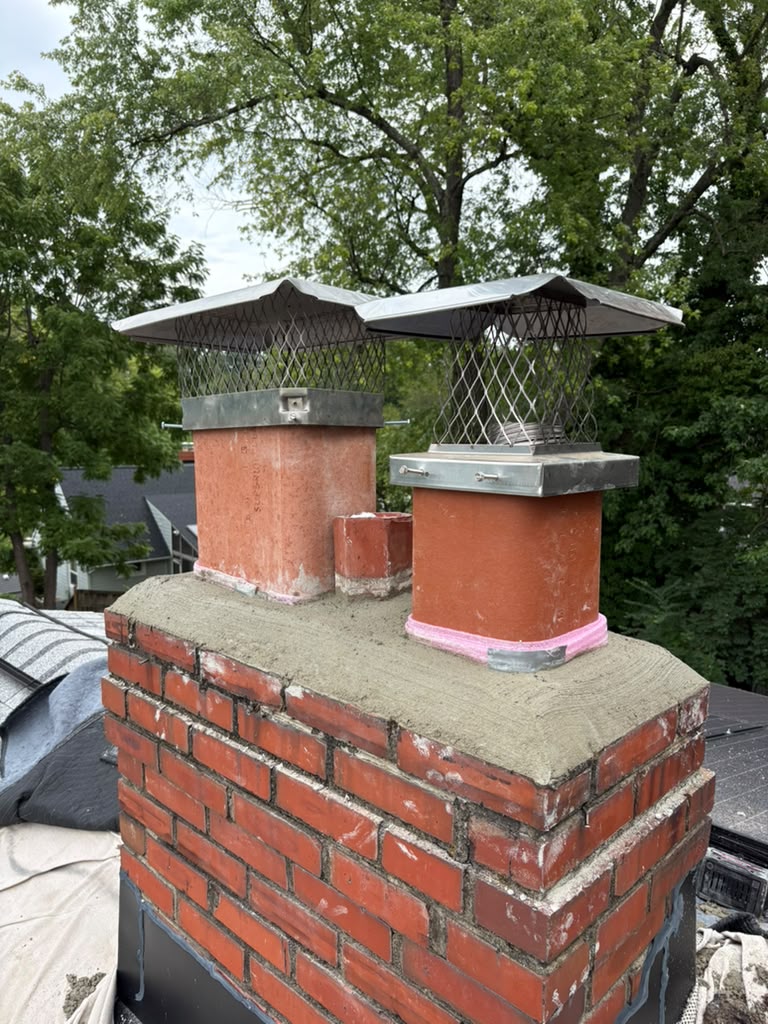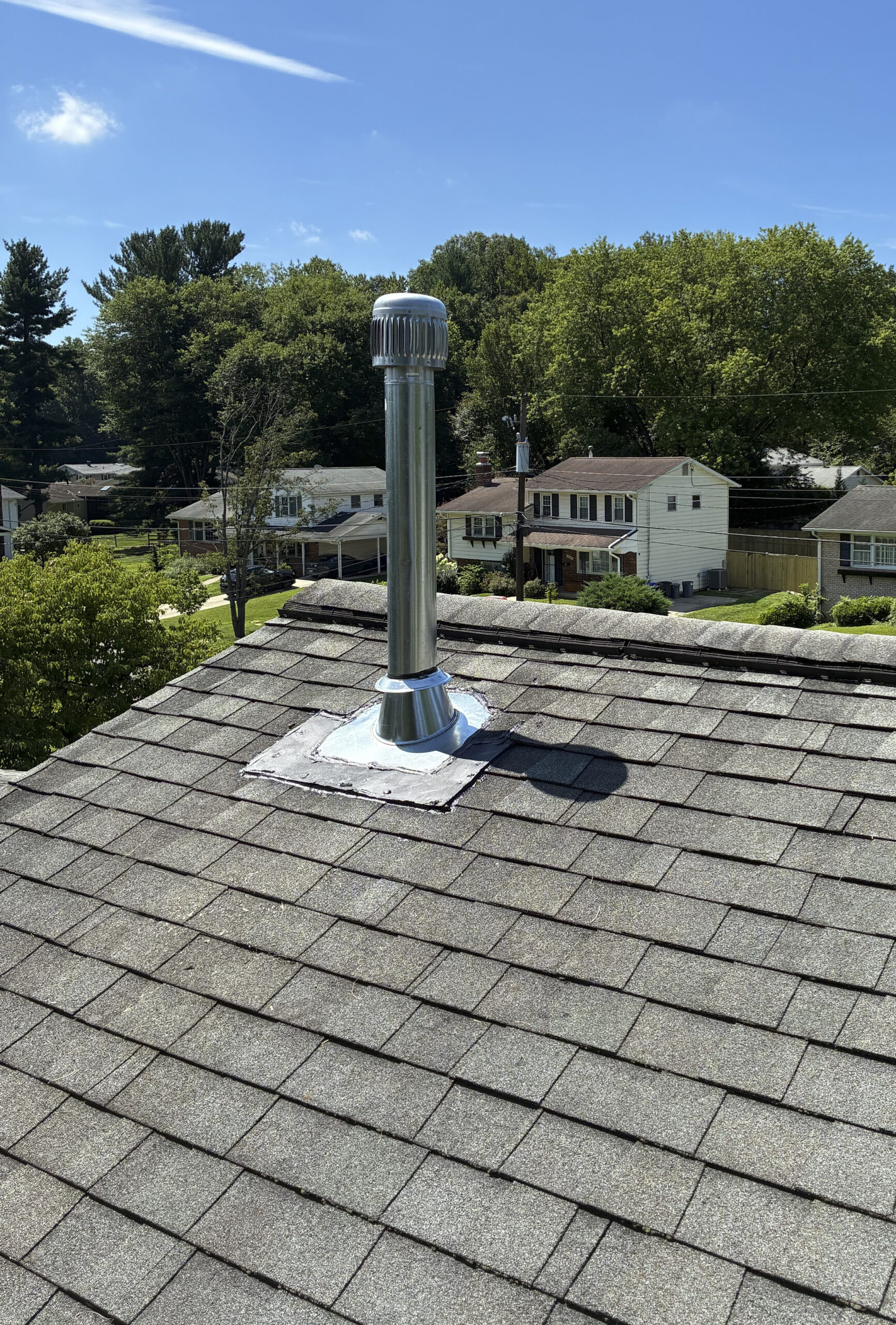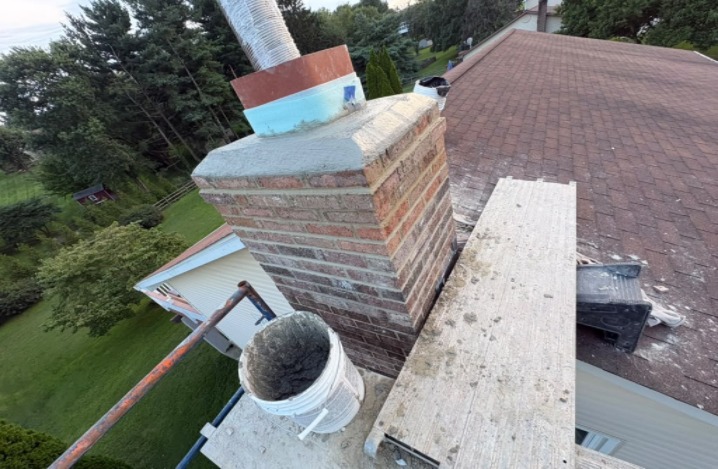

An Annapolis chimney repair can involve several parts of the chimney at the same time. On this project in Annapolis, MD 21403, the chimney needed repointing, a new mortar crown, and flue liner work. Addressing those areas together allowed the exterior masonry, chimney top, and flue system to be handled as one coordinated repair.
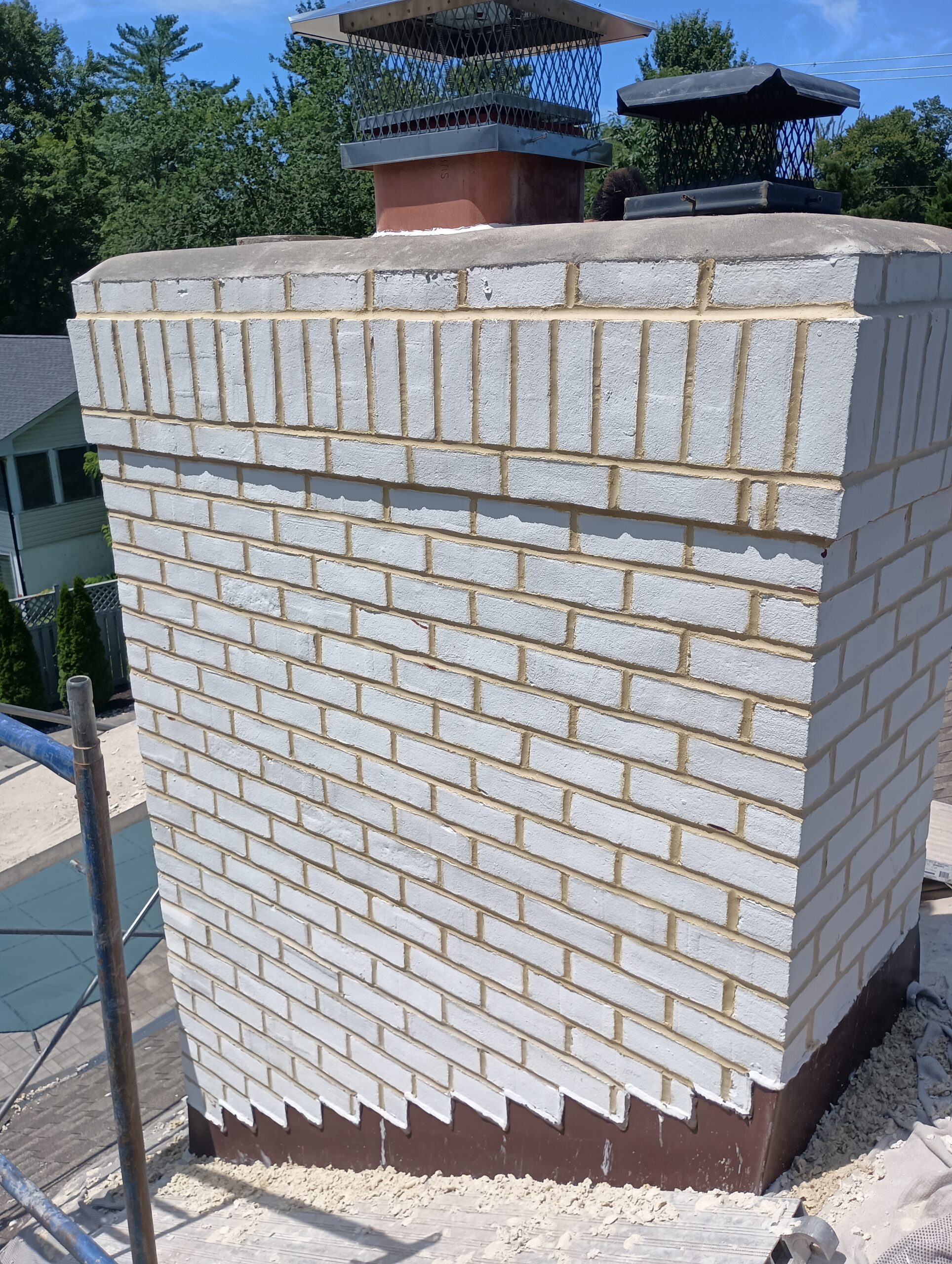
The finished photos show the repaired painted-brick chimney, renewed mortar joints, new crown, and chimney caps. The liner is inside the flue, so it is not visible in the finished exterior photo.
Request a Free Estimate – call Chelsea’s Chimney at (301) 960-5664. Our team includes CSIA Certified Technicians, a CCR Certified Chimney Reliner, and OSHA-trained professionals. Chelsea’s Chimney is licensed, bonded, and insured under MHIC #115994.
What This Annapolis Chimney Repair Included
A chimney is made up of several components that work together. The brick and mortar form the exterior structure. The crown helps direct water away from the top. Meanwhile, the liner provides the passage that carries combustion byproducts through the flue.
For this project, the repair scope included three major items. We repointed deteriorated mortar joints, replaced the mortar crown, and completed liner work inside the chimney. Each part had a different job, but all three were important to the completed repair.
Repointing the Mortar Joints
Repointing removes deteriorated mortar from masonry joints and replaces it with sound mortar. It is different from coating weak joints with a thin layer of new material. First, the damaged joint material must be addressed. Then new mortar can be placed and finished to restore the joint.
Mortar joints can wear before the surrounding brick. Maryland weather also puts masonry through repeated cycles of rain, cold, and freezing temperatures. Therefore, open or weakened joints can become more vulnerable as moisture enters and temperatures change.
The finished chimney shows renewed mortar joints across a large portion of the painted brickwork. The new joints provide a more consistent masonry surface while allowing sound bricks to remain in place.
Learn more about our chimney and fireplace repair services.
Rebuilding the Mortar Crown
The mortar crown is the broad surface at the top of a masonry chimney. Its purpose is to help direct rain and melting snow away from the flue openings and masonry below. Because the crown is exposed to weather every day, its condition deserves attention during a chimney evaluation.
On this project, the mortar crown was replaced as part of the repair. A sound crown provides a protective top surface around the flue terminations. In addition, it helps reduce direct water entry into the masonry from above.
Water can contribute to cracking, loose mortar, and other masonry damage over time. Therefore, crown condition and mortar-joint condition often need to be considered together.
Liner Work Inside the Flue
The third part of the project was the liner. A chimney liner forms the interior venting passage for the system. Depending on the chimney and appliance, common liner types include clay tile, stainless steel, and cast-in-place systems.
The project notes confirm that liner work was completed. However, they do not identify the liner material, so we will not guess at the specific type used.
When relining is performed, a Level 2 inspection is required per the NFPA 211 industry standard. A Level 2 inspection includes a video scan of the flue. That helps the technician evaluate interior areas that cannot be fully seen from the fireplace opening or rooftop.
Why Annapolis Chimney Repair Can Involve More Than Masonry
It is easy to focus on the brick because that is the part homeowners can see. However, a chimney also includes hidden interior components. An exterior masonry problem and an interior flue problem can exist at the same time.
That was important on this project. Repointing addressed the mortar joints, while the crown work addressed the top of the chimney. Meanwhile, the liner work addressed the venting passage inside.
This approach treats the chimney as a system rather than focusing only on appearance. As a result, the repair plan can address the conditions found during the evaluation instead of covering only the most visible symptom.
For another look at masonry work, see our chimney repointing project.
How Repointing Helps Preserve Chimney Masonry
Mortar is designed to fill the joints between masonry units. When those joints crack, wash out, or become recessed, the chimney can lose part of its weather-resistant exterior.
Repointing restores those joints with new mortar. However, the goal is not simply to make the chimney look newer. The more important goal is to restore deteriorated joints and help the masonry continue doing its job.
In addition, careful repointing can preserve sound brick that does not need replacement. This can be especially useful on older masonry chimneys where the damage is concentrated in the joints rather than throughout the entire structure.
Homeowners should avoid attempting hazardous rooftop masonry repairs themselves. A professional can evaluate access, masonry condition, and the correct scope before work begins.
Schedule an Inspection – call (301) 960-5664. Chelsea’s Chimney provides chimney inspections, masonry repair, crown work, flue lining, sweeping, caps, and related fireplace services.
Why the Liner Matters During Annapolis Chimney Repair
The liner is mostly hidden, but it is a key part of the chimney system. It provides the passage through which smoke and combustion byproducts travel out of the home. Therefore, liner condition should not be judged from an exterior photo alone.
A professional inspection can provide a closer look inside the flue. In situations that call for a Level 2 inspection, the inspection includes a video scan. This added view can help document the interior condition before repair decisions are made.
The correct liner solution depends on the chimney, appliance, flue dimensions, and existing conditions. Because those factors vary, liner selection and installation should be based on a professional evaluation rather than a one-size-fits-all approach.
For more information about inspection levels, see our Level 2 chimney inspection article.
For general homeowner chimney safety information, visit the Chimney Safety Institute of America.
What the Finished Annapolis Chimney Repair Shows
The third photo is the best image for this blog post because it shows the broadest finished view. The repointed white brick, renewed mortar crown, and two screened chimney caps are all visible in the same frame.
That photo also gives homeowners a useful view of how several repairs come together. The mortar joints are visible across the chimney body. The crown can be seen across the entire top surface. In addition, both flue terminations remain visible above the crown.
The liner itself cannot be seen because it is inside the chimney. Therefore, the photo should not be described as showing the liner. Instead, it documents the exterior portion of a project that also included liner work.
A completed Annapolis chimney repair should be evaluated by more than appearance alone. The scope should match the conditions found, and the homeowner should understand what was repaired and why.
Customer Review From the Annapolis Project
The homeowner shared this review after the work was completed:
“Looking for a Professional Team to address any chimney related problems YOU will find it w Chelsea’s Chimney. Evaluation, Execution and Completion. They were Knowledgeable, Cleaned and Courteous. HIGHLY RECOMMEND THEM!!”
We appreciate feedback that speaks to evaluation, execution, and completion. Chimney projects can involve rooftop access, masonry work, inspection equipment, and careful cleanup. Therefore, communication and clean work practices matter along with technical skill.
Chelsea’s Chimney is family-owned and based in Gaithersburg, Maryland. Our team includes CSIA Certified Technicians and a CCR Certified Chimney Reliner. We are licensed, bonded, and insured under MHIC #115994. We are also open Saturdays and offer free estimates.
Annapolis Chimney Repair FAQ
How do I know if my chimney needs repointing?
Look for mortar joints that are cracked, missing, recessed, or crumbling. However, visible deterioration does not always show the full condition. A professional chimney evaluation can determine how widespread the damage is and whether repointing is appropriate.
What is the difference between a chimney crown and a chimney cap?
The crown covers the top of the masonry chimney around the flue openings. A chimney cap sits over a flue opening. The crown helps direct water away from the masonry, while the cap helps keep rain, animals, and debris out of the flue.
Can a mortar crown be repaired without rebuilding the chimney?
Often, crown work can be completed without rebuilding the entire chimney. However, the correct repair depends on the crown and the masonry below it. An inspection helps determine whether crown repair, replacement, or more extensive masonry work is appropriate.
When is a Level 2 chimney inspection required?
Per the NFPA 211 industry standard, a Level 2 inspection is required for situations that include a property sale or transfer, a fuel-type change, relining, or an event that may have damaged the chimney. A Level 2 inspection also includes a video flue scan.
Why can liner problems be hard to see?
The flue liner is inside the chimney. Therefore, much of it cannot be properly evaluated from the exterior or from the fireplace opening alone. Video scanning provides a closer view of the flue interior when a Level 2 inspection is required.
Need a Chimney Evaluation?
If your chimney has deteriorated mortar, crown damage, or possible liner concerns, start with a professional evaluation. The right repair scope should be based on what is actually found.
If you are considering an Annapolis chimney repair, call Chelsea’s Chimney at (301) 960-5664 to Request a Free Estimate. Our certified team can inspect the chimney, explain the findings, and recommend appropriate next steps.