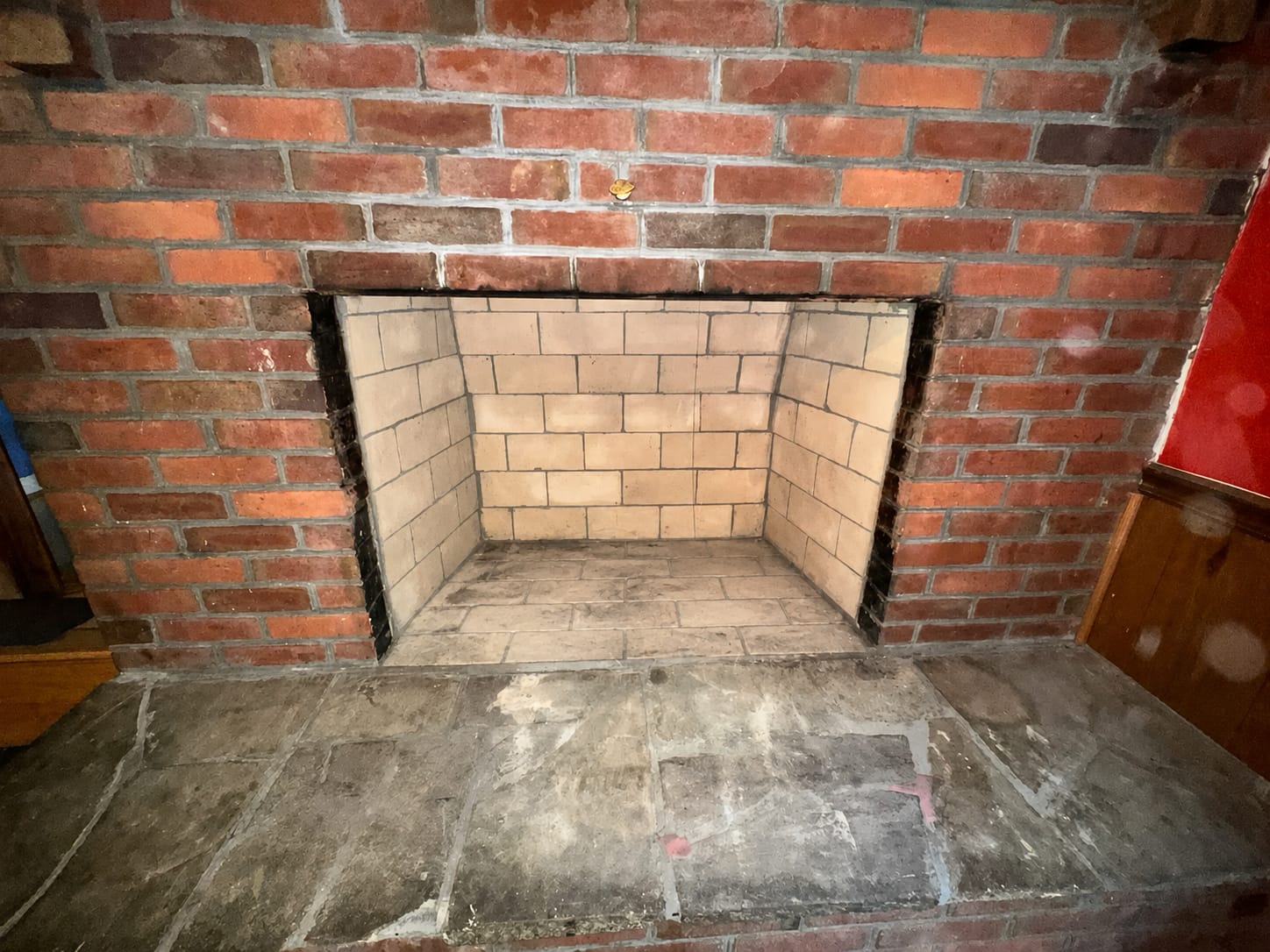

This Columbia chimney rebuild addressed worn masonry at the top of the chimney, deteriorated flue tile, an aging crown, and the need for a new damper cap. The project combined masonry reconstruction with a 13 x 13 stainless steel Premier Damper Cap. The goal was simple: rebuild the damaged chimney top correctly, improve water protection, and give the homeowner an easy way to operate the damper from the firebox.
Chelsea’s Chimney serves Columbia and communities throughout Howard County with CSIA Certified Technicians, CCR Certified Chimney Reliner credentials, OSHA-trained personnel, and a licensed, bonded, and insured team. MHIC #115994. We are also open Saturdays.
Request a Free Estimate: (301) 960-5664.
Columbia Chimney Rebuild Project Overview
At this Columbia, MD 21045 home, the existing upper brickwork and mortar crown had reached the point where rebuilding was the right repair plan. First, the crew would tear down the affected bricks and remove all job site debris. Next, the chimney would be rebuilt with brick approved by the homeowner.
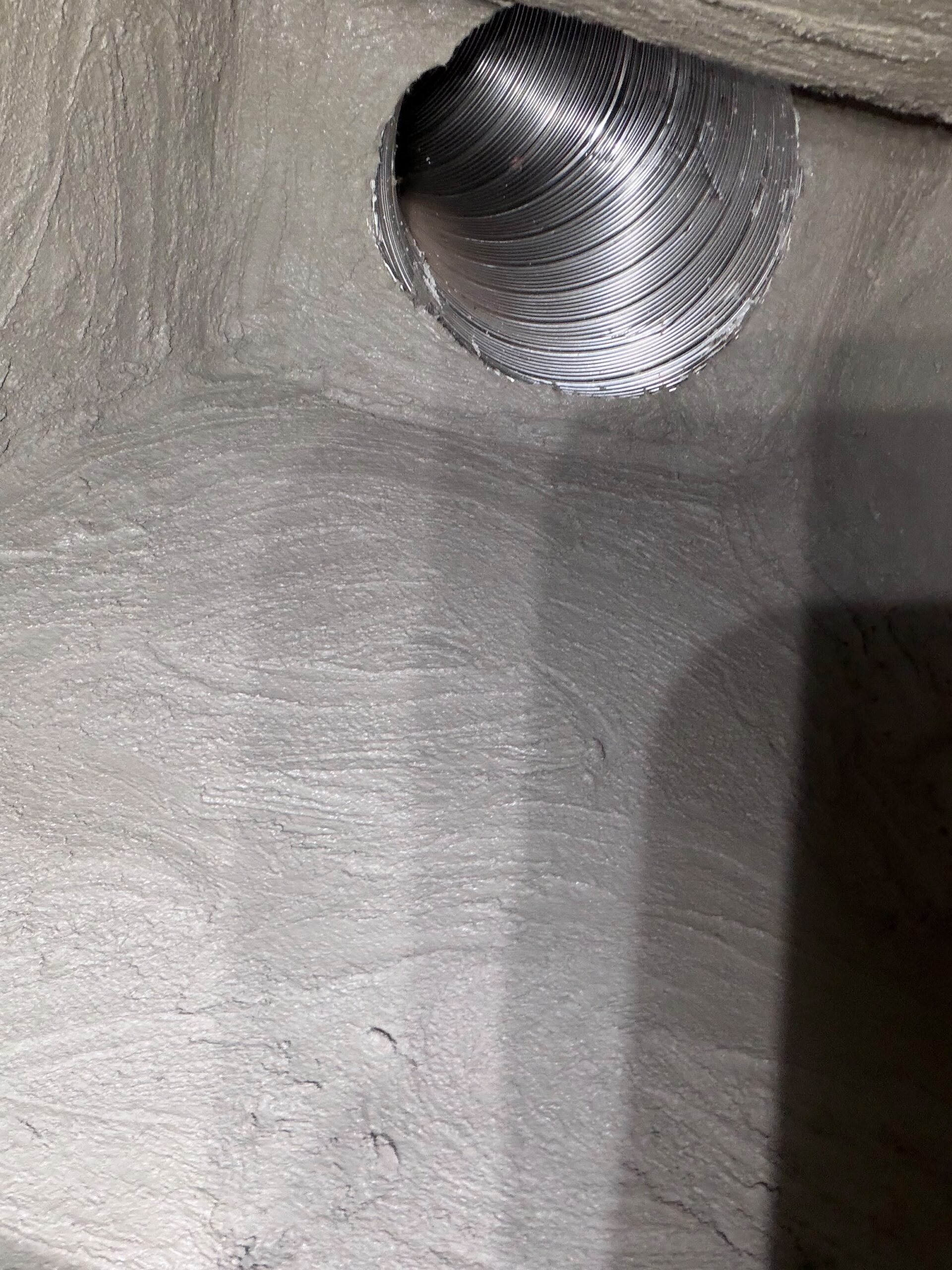
The scope also included replacing deteriorated flue tiles. In addition, the old mortar crown would be removed and replaced with a new concrete crown. An expansion joint around the flue tile would help accommodate movement between the materials as temperatures change.
Finally, the project called for a stainless steel Premier Damper Cap. The cap includes an animal guard, rain cap, high-heat rubber gasket, adjustable steel cable, and a firebox-mounted L bracket.
For additional local chimney services in Columbia, see Chelsea’s Chimney’s Columbia service page. Columbia, MD chimney services
Why This Columbia Chimney Rebuild Included Masonry and Flue Work
A chimney rebuild should address the parts that have actually failed. Simply covering damaged masonry or placing a new cap over a weak chimney top does not correct deteriorated brick, mortar, crown material, or flue tile.
In this case, the upper chimney needed demolition and reconstruction. Therefore, the crew could rebuild on sound material rather than trying to preserve sections that no longer belonged in a lasting repair. The flue tile condition also mattered because the liner forms part of the fireplace venting system.
Before masonry work begins, Chelsea’s Chimney provides a mortar sample to the homeowner. The homeowner can review the proposed mortar and brick before the team moves forward. As a result, the repair plan considers both performance and the appearance of the finished chimney.
This careful approval process is especially useful on visible exterior masonry. Older brick and mortar have already weathered for years. Therefore, selecting replacement materials before construction helps set clear expectations for the finished project.
Premier Damper Cap Installation
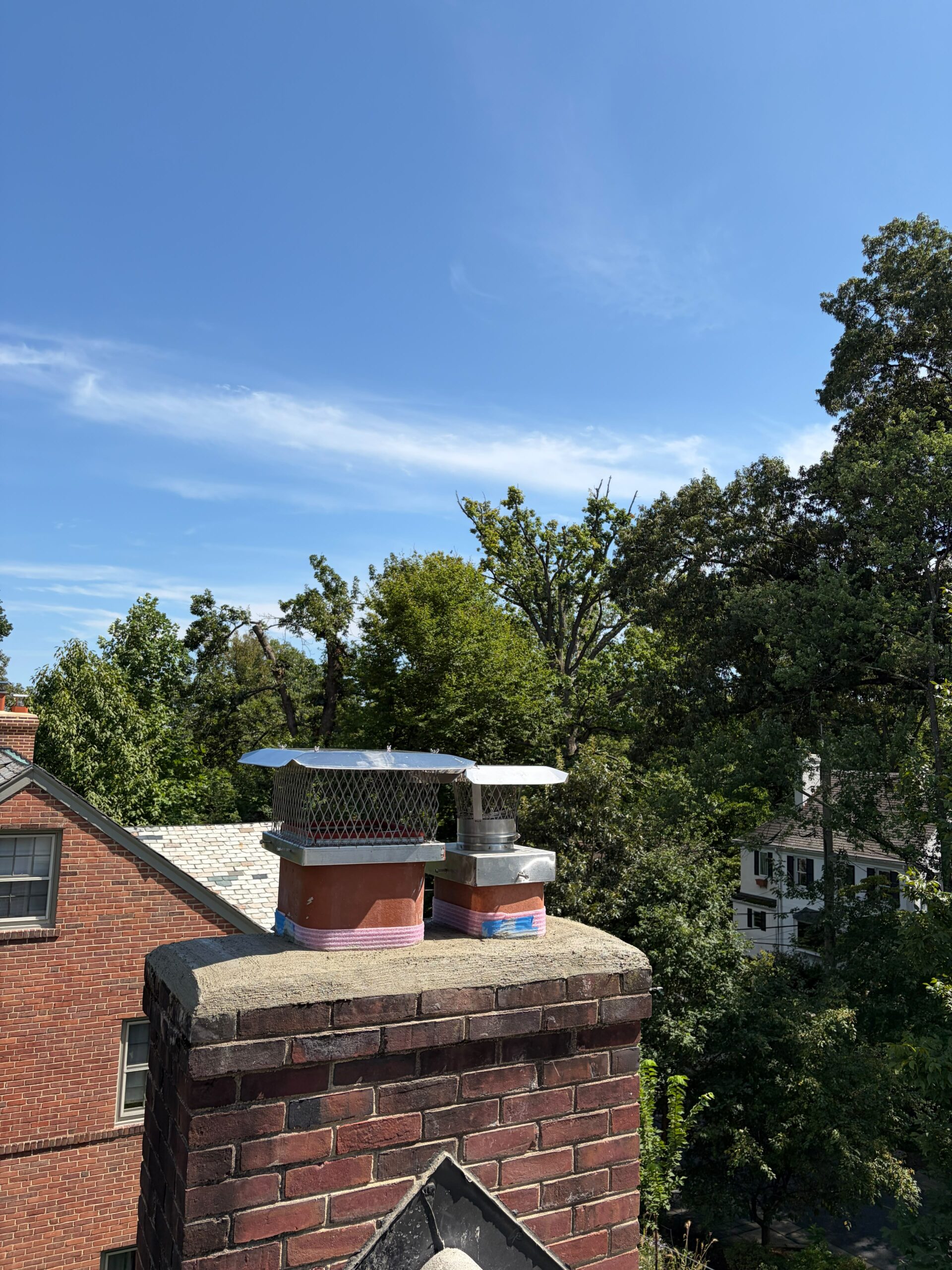
The 13 x 13 Premier Damper Cap sits at the top of the flue and combines several functions in one assembly. Its stainless steel construction is well suited to outdoor chimney use. Meanwhile, the mesh animal guard helps block wildlife and larger debris from entering the flue.
The rain cap helps reduce direct water entry from above. In addition, the high-heat gasket provides the sealing surface for the top-mounted damper. An adjustable steel cable runs down to the firebox, where an L bracket supports the operating hardware.
The homeowner also has the option of an easy lever-style handle for opening and closing the damper. Because the control is located at the firebox, the homeowner can operate the damper from inside the home.
The Chimney Safety Institute of America also recommends chimney caps as a way to help keep rainwater and animals from entering a chimney. CSIA chimney water protection guidance
Schedule an Inspection: (301) 960-5664.
Building a Better Crown Around the Flue
The chimney crown has an important job. It sits above the brickwork and helps direct rain away from the masonry below. However, the crown also surrounds the flue tile, and those materials can move differently as temperatures change.
For this project, the plan included a new concrete crown with an expansion joint around the flue tile. That joint creates separation between the crown and flue tile. Therefore, normal movement is less likely to transfer stress directly into the crown.
After the crown is placed, Chelsea’s Chimney wraps it with plastic for two days so the curing process can begin in a controlled way. Once the chimney is unwrapped, NP1 sealant is used to seal the expansion joint.
This detail matters because the point where the flue passes through the crown needs careful treatment. A solid crown alone is not the entire solution. Instead, the crown, flue penetration, expansion joint, and sealant need to function together.
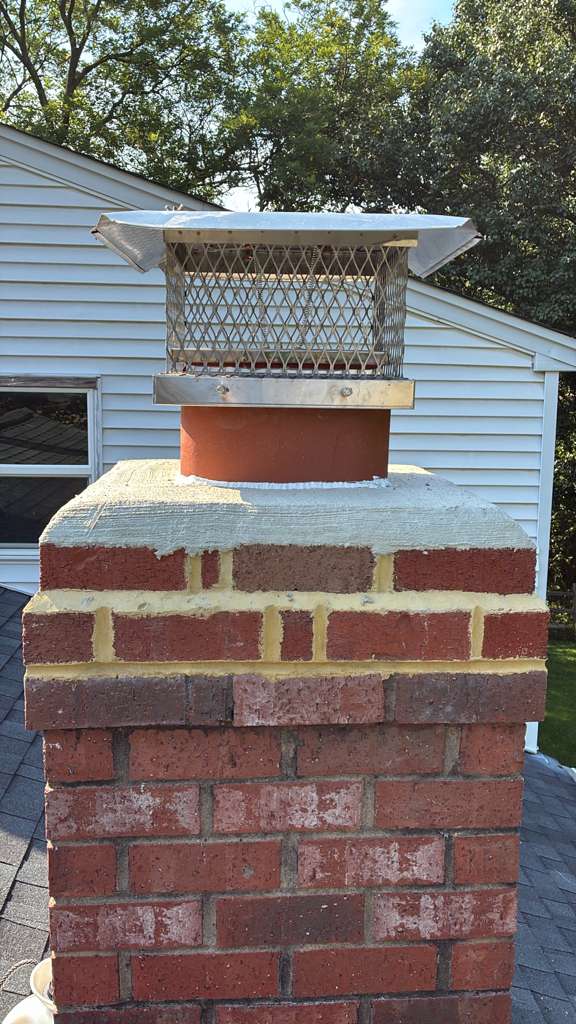
The project photo shows the rebuilt chimney top with fresh upper masonry, a light-colored crown, a terracotta flue tile, and a stainless steel cap with mesh animal protection.
How We Managed Brick and Mortar Matching
A rebuild changes visible masonry, so material selection matters. First, the homeowner reviews the proposed brick. Then, Chelsea’s Chimney provides a mortar sample before starting the rebuild.
That process gives the homeowner a chance to approve the appearance before work progresses. In addition, it helps the crew establish a clear plan for the new upper chimney. Exact color blending can vary because existing bricks and mortar have weathered over time.
Once the brick and mortar are approved, the crew can complete demolition and rebuild the damaged portion. Next, the team can replace deteriorated flue tiles and form the new crown. Finally, the damper cap and remaining project details can be completed.
Job site debris is removed as part of the work. In addition, final project photos are provided after the last visit.
Homeowners can also review Chelsea’s Chimney’s broader chimney inspection and repair services. Chimney and fireplace services
For service throughout the surrounding area, see the Howard County chimney service page. Howard County chimney services
Why Columbia Chimney Rebuild Details Matter in Maryland Weather
Columbia homes experience hot summers, cold winters, rain, and repeated temperature swings. Because masonry is porous, moisture management matters at the top of a chimney. Freeze-thaw cycles can also worsen small cracks when moisture enters masonry and later freezes.
A sound crown, properly detailed flue penetration, and protective cap work together at the most exposed part of the chimney. However, those top components cannot compensate for badly deteriorated brick or mortar below them. That is why rebuilding sometimes makes more sense than a surface repair.
This Columbia chimney rebuild combined structural masonry work with water-shedding details and a new damper cap. As a result, the project addressed several related parts of the chimney at the same time.
If you notice cracked crown material, loose bricks, missing mortar, damaged flue tile, or a failing cap, a professional inspection is the right first step. Chelsea’s Chimney can evaluate the chimney and explain whether masonry repair, partial rebuilding, flue work, or another service fits its condition.
Request a Free Estimate: (301) 960-5664.
FAQ About a Columbia Chimney Rebuild
How do I know if my chimney needs a rebuild instead of repointing?
Repointing replaces deteriorated mortar joints while keeping sound bricks in place. A rebuild becomes more appropriate when brickwork is loose, badly deteriorated, displaced, or no longer suitable to remain. Therefore, an inspection should determine how much masonry actually needs replacement.
Why replace deteriorated flue tiles during a chimney rebuild?
Damaged flue tiles can affect the integrity of the venting system. If deteriorated tiles are accessible within the repair area, replacement may become part of the rebuild. In other situations, an inspection may show that a different liner repair or relining method is more appropriate.
Why does the crown need an expansion joint around the flue tile?
The flue tile and crown can expand and contract differently as temperatures change. Therefore, an expansion joint helps separate the materials and reduces direct stress where they meet. The joint can then be sealed with an appropriate high-performance sealant.
What does a Premier Damper Cap do?
This damper cap closes at the top of the flue and connects to a cable that runs down to the firebox. In addition, the installed assembly includes a rain cap and animal guard. The homeowner operates the damper from below with the connected handle system.
How long does the new chimney crown stay wrapped?
For this project, the crown is wrapped with plastic for two days to allow the curing process to begin. Afterward, the chimney can be unwrapped so the expansion joint can be sealed with NP1 and the remaining project details completed.
Schedule Chimney Repair in Columbia, MD
A chimney top works as a system. Brick, mortar, flue tile, crown details, and the cap all need to work together. Therefore, a careful repair plan should address the condition of each component instead of treating only the most visible symptom.
For homeowners considering a Columbia chimney rebuild, a professional inspection helps define the correct repair scope before masonry work begins. It can also identify related flue, crown, or cap concerns that should be considered during the project.
Chelsea’s Chimney provides chimney inspections, masonry repairs, chimney rebuilds, flue work, and cap installation in Columbia and throughout Howard County. Our team includes CSIA Certified Technicians and a CCR Certified Chimney Reliner. We are licensed, bonded, and insured under MHIC #115994, and we are open Saturdays.
Call (301) 960-5664 to Schedule an Inspection or Request a Free Estimate.