
What Homeowners Should Know
Chimney repair before winter gives homeowners time to fix masonry and venting concerns before regular fireplace use begins. Maryland weather can be tough on brick, mortar, crowns, and chimney caps. In addition, problems at the top of a chimney can allow water to reach areas that homeowners cannot see from the ground.
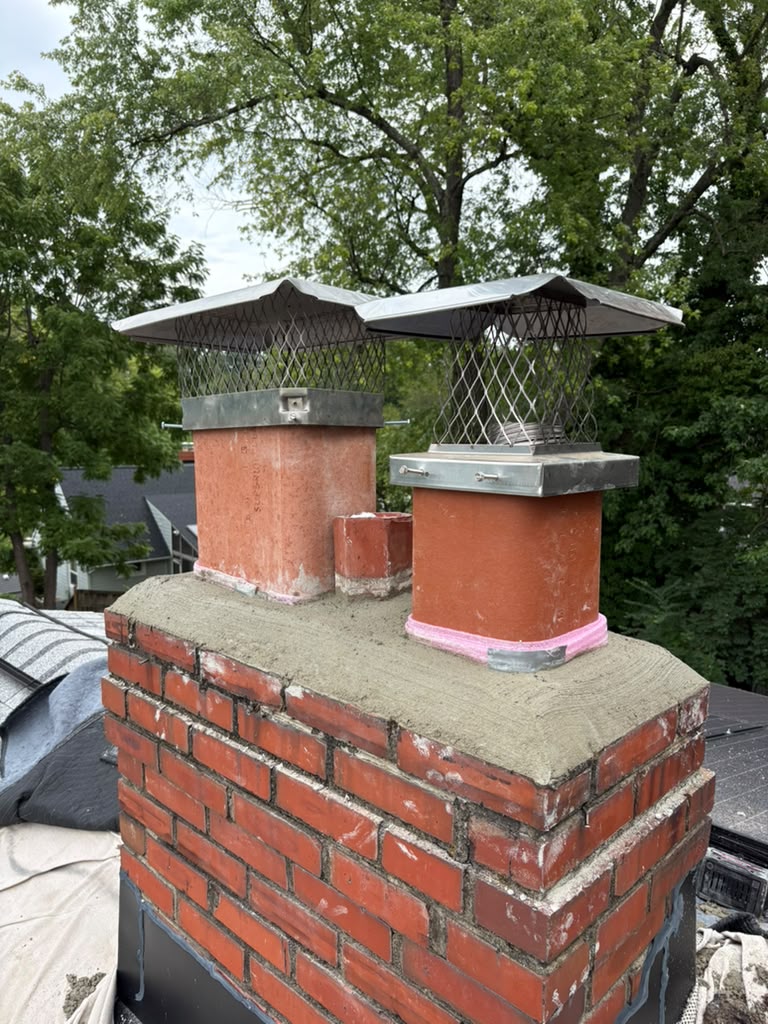
The photo from this project shows a brick chimney with a masonry crown, clay flue tile, and metal chimney cap. Each part helps protect the chimney and support proper venting. However, the exterior only tells part of the story. A professional inspection can also check the fireplace and flue.
Request a Free Estimate or schedule an inspection. Call: (301) 960-5664. Chelsea’s Chimney serves Montgomery County and surrounding Maryland and Washington, DC communities.
Why Chimney Repair Before Winter Matters
Maryland winters bring rain, snow, and repeated temperature changes. Because brick and mortar can absorb moisture, winter weather may make existing cracks and weak mortar joints worse.
For example, water can enter a small crack and freeze when temperatures fall. The water expands as it freezes. Then, warmer weather allows it to thaw again. Over time, that freeze-thaw cycle can wear down masonry.
The chimney crown also plays an important role. It covers the top of the masonry and helps move rainwater away from the brick below. Meanwhile, the chimney cap protects the flue opening from direct rain, debris, and many animals.
Therefore, chimney repair before winter is about more than appearance. It helps homeowners deal with known problems before cold-weather fireplace use begins.
For more information about routine checks, see HERE.
What the Chimney Photo Shows
The selected photo, 20260513_110559.jpg, gives a clear look at the top of the chimney.
The brick stack rises above the roofline. At the top, a masonry crown surrounds the clay flue tile. A metal chimney cap with screening covers the flue opening.
The crown helps shed water away from the top of the chimney. In addition, the raised clay flue tile provides the outlet for the flue. The cap adds another layer of protection at the opening.
From this angle, homeowners can also see why roof-level chimney parts deserve attention. These areas face direct exposure to sun, rain, snow, and changing temperatures.
However, one roof photo cannot confirm the condition of the full chimney system. A technician still needs to check the accessible masonry and venting system before making repair recommendations.
What Chimney Repair Before Winter May Include
The right repair depends on what the inspection finds. Therefore, a good chimney company should recommend work based on the condition of the system instead of using the same repair for every home.
Mortar Joint Repair
Mortar sits between the bricks and helps hold the chimney together. Over time, weather can cause those joints to crack or wash away.
Repointing removes weak mortar and replaces it with new material. Tuckpointing may also help restore worn mortar joints in suitable areas. However, the technician first needs to determine whether the surrounding bricks remain sound.
Chimney Crown Repair
The crown protects the top of the masonry. Cracks or worn areas can give water a path into the chimney.
Depending on the damage, the crown may need a smaller repair or more extensive work. Therefore, an inspection should come before the repair plan.
Learn more at HERE.
Chimney Cap Service
A chimney cap sits above the flue opening. It helps reduce direct rain entry and blocks many animals and larger pieces of debris.
However, caps can loosen, rust, or suffer storm damage. A technician can check the cap, screening, and attachment while inspecting the chimney top.
Flue and Chimney Liner Work
The flue carries smoke and exhaust gases out of the home. Common liner types include clay tile, stainless steel, and cast-in-place liners.
Stainless steel often works well for chimney relining when the existing system needs a new liner. Because liner work affects the venting system, homeowners should leave this work to trained chimney professionals.
Chelsea’s Chimney has CSIA Certified Technicians and holds the CCR Certified Chimney Reliner credential.
For more information, see HERE.
Why Inspection Matters Before Repairs
Exterior chimney damage can offer useful clues. However, the outside of the chimney does not show every possible problem.
A professional inspection helps the technician understand the chimney before recommending work. The inspection level depends on the home’s situation and the history of the system.
For routine annual service, a Level 1 inspection usually applies when the appliance, fuel, and venting system have not changed. The technician checks readily accessible areas of the chimney and fireplace.
NFPA 211 calls for a Level 2 inspection in several situations. These include a property sale or transfer, a fuel-type change, chimney relining, or an event such as a chimney fire or storm. In addition, a Level 2 inspection includes a video scan of the flue.
A Level 3 inspection goes further when the technician suspects a hidden hazard. In those cases, reaching the problem may require access behind parts of the chimney or building.
For homeowner chimney safety information, visit CSIA.org.
Schedule an Inspection with Chelsea’s Chimney. Call: (301) 960-5664. We offer free estimates and Saturday appointments.
When to Schedule Chimney Repair Before Winter
The best time to address chimney repair before winter is before you plan to use the fireplace regularly. Earlier scheduling gives you more time for an inspection and any recommended work.
In addition, some masonry work depends on suitable weather. Waiting until the coldest part of the year may limit scheduling options.
Homeowners should pay attention to signs such as cracked mortar, loose bricks, crown cracks, water stains, or a damaged chimney cap. Smoke problems or unusual fireplace odors also deserve professional attention.
Still, do not rely only on visible warning signs. Some problems develop inside the flue where homeowners cannot see them.
Property changes can also affect the inspection you need. For example, NFPA 211 calls for a Level 2 inspection after certain changes and events. A chimney professional can explain which level fits your situation.
Alan’s 5-Star Experience with Chelsea’s Chimney
Alan gave Chelsea’s Chimney a five-star review after his chimney project:
“We had a fantastic experience with Chelsea’s chimney. Greg was very communicative about our options, gave a fair quote, and always took the time to answer my questions. The crew finished the work quickly and left the site neat. We are excited to finally be able to use our chimney again this winter. Thank you so much!”
His review highlights several things homeowners should expect from a chimney contractor. First, the company should explain the available options clearly. Next, homeowners should have a chance to ask questions before work begins. Finally, the crew should respect the home and keep the work area neat.
Alan also mentioned that he looked forward to using his chimney again during winter. That makes this project a good reminder to deal with chimney concerns before fireplace season whenever possible.
Chelsea’s Chimney is a family-owned company based in Gaithersburg, Maryland. Our CSIA Certified Technicians serve homeowners throughout Montgomery County and nearby areas.
In addition, our team includes CCR Certified Chimney Reliner credentials and OSHA-trained professionals. Chelsea’s Chimney holds MHIC #115994 and operates as a licensed, bonded, and insured contractor.
Chimney Repair Before Winter FAQ
How early should I schedule chimney repair before winter?
Schedule service as soon as you know the chimney needs attention. Earlier appointments give you more time for the inspection, repair plan, and any weather-sensitive masonry work. In addition, chimney companies often become busier as fireplace season approaches.
Does every damaged chimney need to be rebuilt?
No. Some chimneys only need repairs in specific areas. For example, the work may involve mortar joints, the crown, flashing, a cap, waterproofing, or the flue. More serious masonry damage may require larger repairs.
What is the difference between Level 1 and Level 2 inspections?
A Level 1 inspection fits routine annual service when the chimney system and its use remain unchanged. However, NFPA 211 calls for a Level 2 inspection after certain changes or events. A Level 2 also includes a video scan of the flue.
Why does the chimney crown matter?
The crown covers the top of the brick chimney and helps direct water away from the masonry. Therefore, cracks in the crown can make it easier for moisture to reach the chimney structure.
Can I tell whether my chimney is safe from an exterior photo?
No. A photo can show visible roof-level conditions, but it cannot show the entire flue or fireplace system. Therefore, a professional inspection provides a much better picture of the chimney’s condition.
Request a Free Estimate before fireplace season. Call: (301) 960-5664. Chelsea’s Chimney has CSIA Certified Technicians, offers Saturday service, and serves homeowners across Maryland and Washington, DC.